


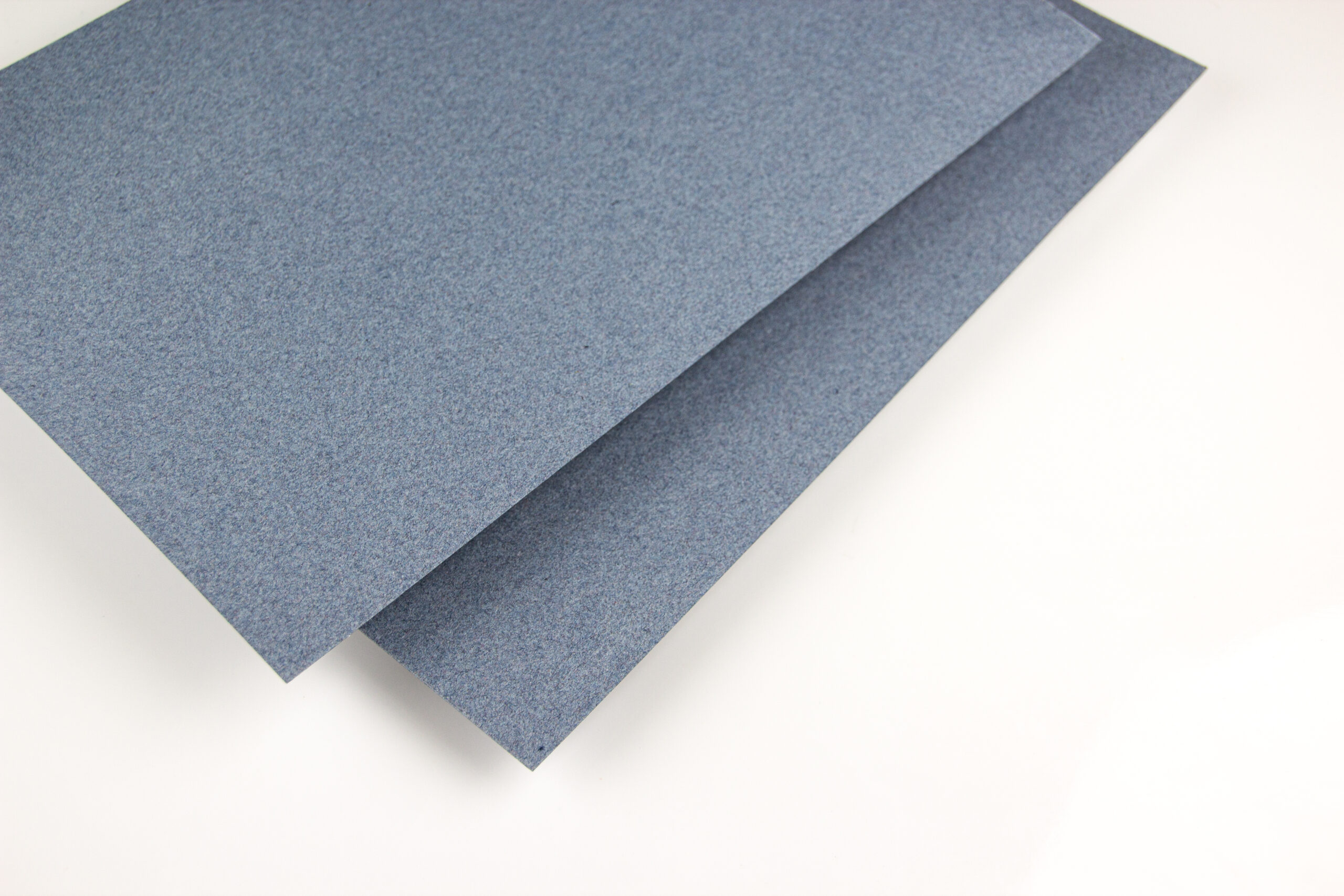

FIBRO WOOL
Our specialty fiber paper for the safety glass industry
Why our specialty paper stands out:
| Property | Value | Method |
|---|---|---|
| Basis weight | 180 g/m² | EN ISO 536 |
| Thickness | 0,34 mm | EN ISO 534 |
| Density | 0,53 g/cm³ | EN ISO 534 |
| Colour | blue-grey | |
| Composition | 15-20 % wool, 80–85 % cotton, 5 % other fibers, no chemical additives |
downloads
FAQ
FibroWool is our specialty fiber paper for the safety glass industry. It is used as press cushion paper in the production of laminated safety glass and supports uniform pressure distribution in the lamination process. This allows the glass to be processed in a controlled manner without unnecessarily stressing the surface.
FibroWool is used as a press pad paper in laminated safety glass manufacturing. Its role is to evenly distribute pressure during lamination, reduce air bubbles, and ensure a smooth process. This is crucial for clean, reproducible processing in vacuum bag or autoclave methods.
FibroWool is designed to support optimal pressure equalization, creating the conditions for trouble-free lamination without air bubble formation. This is crucial for laminated safety glass in particular, as uneven pressure can impair laminate quality and the appearance of the glass.
No. FibroWool is engineered for processing to ensure it leaves no residue on the glass. At the same time, the material helps prevent film bleed. This is crucial in safety glass production, as clean surfaces and controlled edge areas directly impact process quality and the final result.
Yes. Unlike conventional papers, FibroWool is processed acid-free. This is relevant for sensitive glass processes because the material is designed for applications where residue-free properties, material compatibility, and clean processing are paramount.
FibroWool is temperature-resistant up to 180 °C. This makes the specialty fiber paper suitable for thermally demanding processing operations in the safety glass industry, particularly where press cushion paper must remain reliably dimensionally and functionally stable during lamination.
FibroWool consists of 15 to 20% wool, 80 to 85% cotton, and approximately 5% other fibers. No chemical additives are used. This material composition is tailored to the requirements of safety glass processing and combines natural fibers with the functional properties necessary for the process.
